
The Outsourced Supply Chain Nightmare
Ask any real estate marketing director about their biggest headache during a new site launch, and the answer almost always comes down to managing fragmented suppliers.
The traditional agency setup involves a brand agency designing the identity, a third party CGI studio rendering the images, and a freelance web developer attempting to build the site.
On paper, this looks like assembling specialists. In practice, it creates a chaotic game of telephone where creative direction gets diluted at every handoff:
- The CGI studio works in isolation: They produce architectural renders using lighting moods, furniture styles, and color palettes that completely clash with the brand guidelines established by the design team.
- The web developer gets unusable assets: They receive static, ultra heavy file formats from the CGI team that lag on mobile interfaces, lack dynamic video loops, and miss critical crop ratios.
- The strategy falls apart: The brand strategist writes copy about contemporary heritage, while the render team populates the 3D scenes with traditional rustic furniture because nobody guided them.
The developer ends up acting as an unpaid project manager, spending endless hours in steering meetings trying to get three separate companies aligned on the same vision.
Why Most Studios Outsource (And Why It Is Hard)
Running a creative agency that handles branding, web engineering, and high end CGI completely in house is notoriously difficult.
It requires managing wildly different skill sets under one roof. High end 3D visualizers, brand strategists, interactive web engineers, and motion designers think differently, use completely different software pipelines, and speak different creative languages.
Because building and running an integrated in house studio is hard work, most agencies take the easy route. They call themselves a full service studio, but quietly outsource their CGI to overseas render farms or hand web development off to external freelancers.
The agency saves on operational overhead, but the client pays the price in fragmented, diluted work.
Why DCTR Kept Everything In House
We built DCTR around a single non negotiable principle: Strategy, Branding, Web Engineering, and CGI must live together under one roof.
We put in the hard work to master all disciplines internally because the commercial benefits for our clients are undeniable:
- Zero Translation Loss: When 3D artists sit in the same room as brand designers and web developers, the visual strategy flows seamlessly from CAD files to website interfaces.
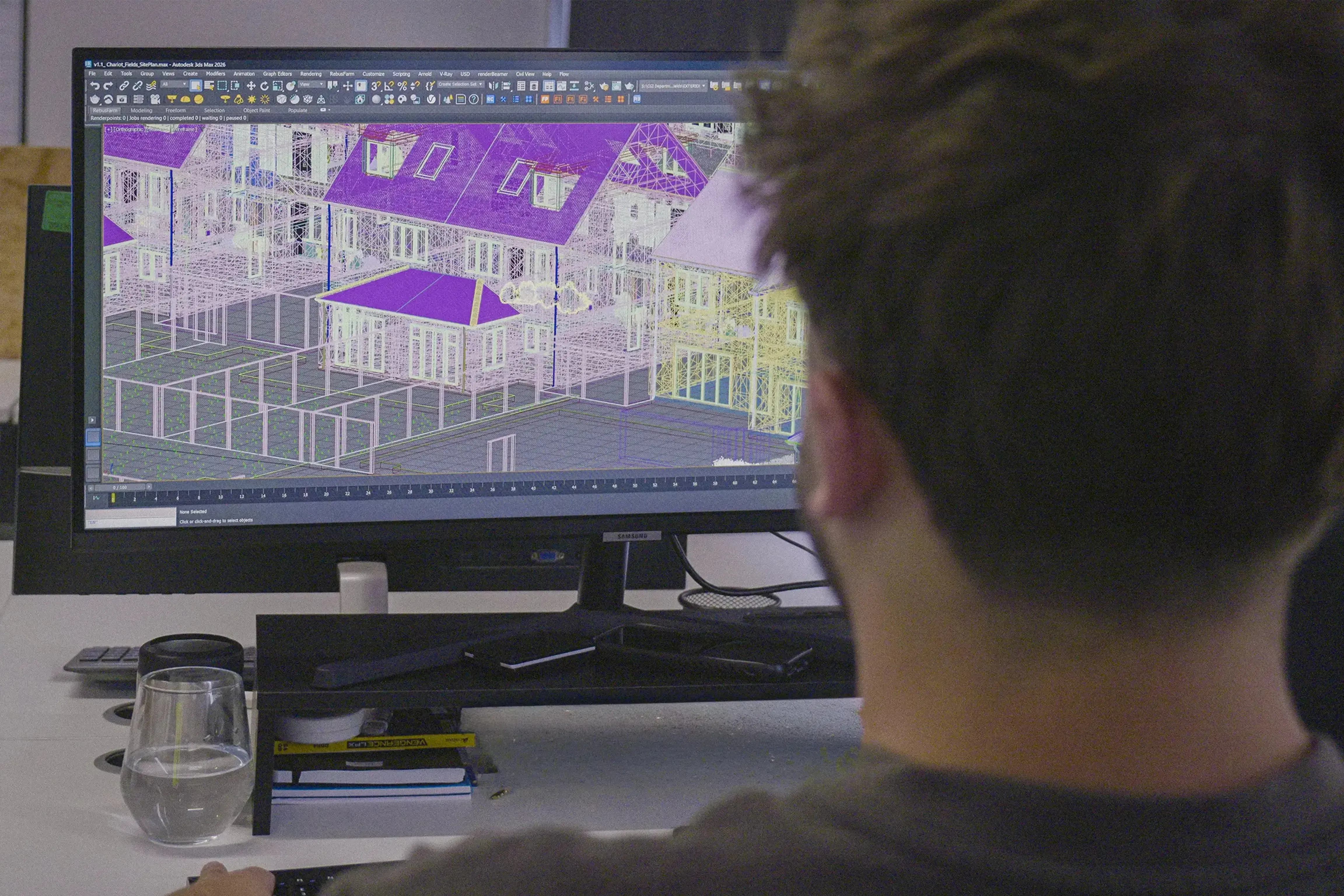
- Assets Engineered for Digital: Our CGI team does not just render pretty pictures. They build visual assets specifically optimized for modern web performance, mobile load speeds, and video loops from day one.
- Instant Feedback Loops: If a brand strategist adjusts the tone of a campaign, the 3D lighting lead can adjust environment shaders immediately. There are no contract disputes between separate vendors, just fluid creative iteration.
- Single Source Accountability: You deal with one team, one point of contact, and one unified creative vision from project kick off to launch day.
Taking the difficult path to keep every creative discipline in house is what allows DCTR to build property brands that look, feel, and convert better than the competition.
Launching a New Development?
Stop managing multiple separate agencies and experience the power of a fully integrated creative studio.
Speak to the DCTR team today to discover how our in house branding, web design, and CGI teams can accelerate your next launch