
The Off Plan Reservation Trap
When off plan sales stall on a new housing development, the default reaction from sales directors is predictable: order three more exterior CGI renders, change the hero image on the portal, and push for more brochure downloads.
It almost never works.
Buying an unbuilt home requires a massive leap of faith. Buyers are asking themselves to hand over a deposit for a space that currently exists as a mud field and a set of architectural drawings. When a buyer hesitates, it is rarely because they could not see the kitchen island clearly enough. They hesitate because they do not feel emotional certainty.
Adding more standalone CGI assets to a weak digital campaign is like putting fresh paint on a broken engine. Renders show what a place looks like, but they do not explain why it matters.
The Flaw in the Asset First Approach
The traditional property marketing process is hopelessly fragmented. A developer hires an architectural visualizer for renders, a print agency for a PDF brochure, and a digital agency for a basic template website.
Because these pieces are produced in isolation, the final buyer journey feels disjointed:
- The CGI exists in a vacuum: Beautiful images sit on a gallery page with zero narrative context.
- The digital experience is static: The site acts like a digital graveyard for static files rather than an immersive, interactive sales tool.
- The brand messaging is generic: The copy relies on overused industry buzzwords like luxury living, bespoke finishes, and prime location.
When prospective buyers encounter this disconnect, suspicion sets in. If the digital touchpoints feel cheap or confusing, buyers subconsciously assume the build quality will follow suit. Rejection happens in the gaps between your marketing touchpoints.
Why High End CGI Is Only Part of the Equation
Do not get us wrong: architectural CGI is essential. At DCTR, we produce high end renders every single day in house. But CGI is a tool within a strategy, not the strategy itself.
A render gets attention for three seconds on Instagram or Rightmove. What happens in the next three minutes determines whether that prospect books a viewing or clicks away.
To turn passive interest into off plan reservations, your visual assets must be woven into an end to end narrative. The lighting in the render should match the tone of the web design. The typography in the digital brochure should reflect the physical signage on site. Every single element must work together to build belief.
The Solution: The DCTR Belief Wheel
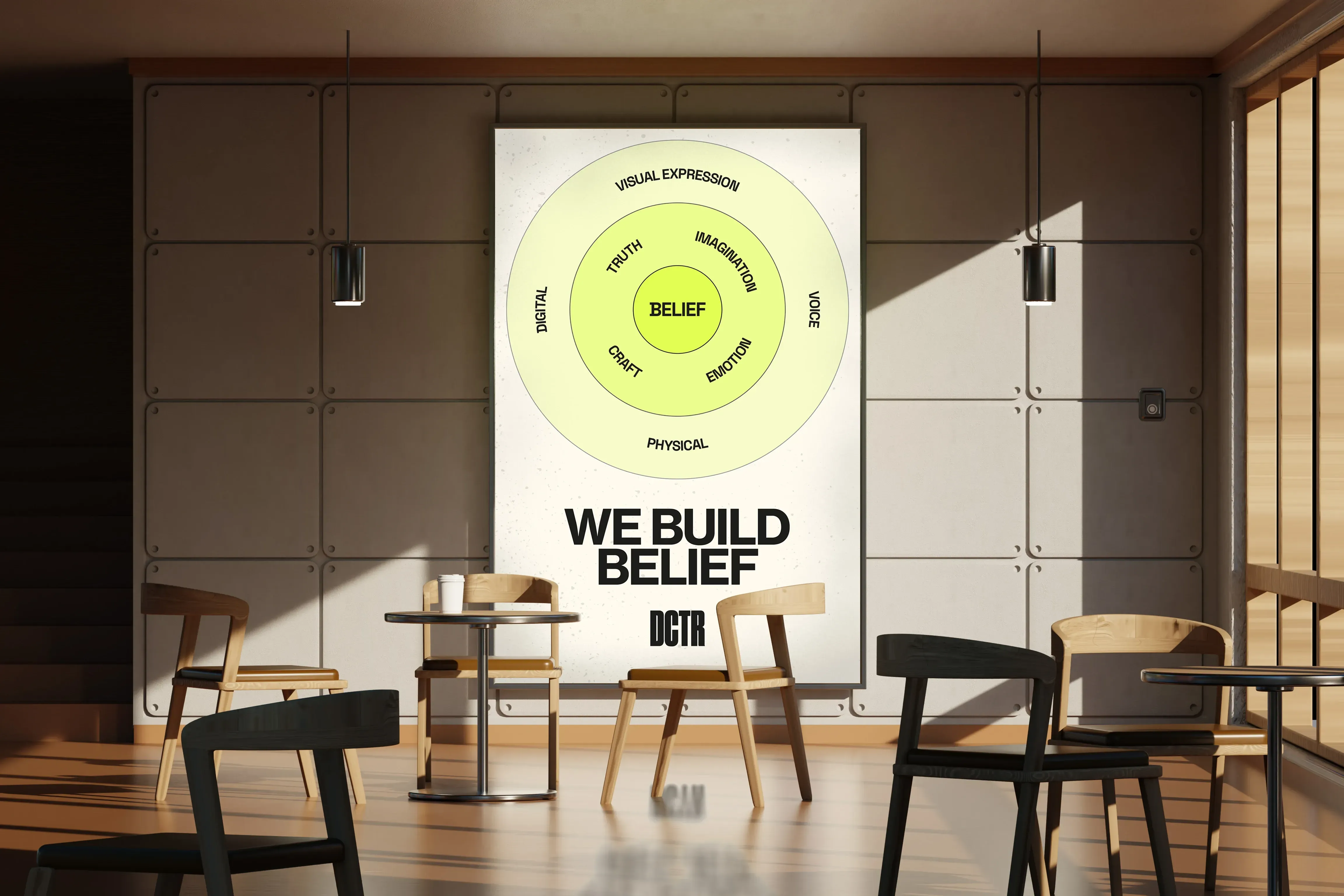
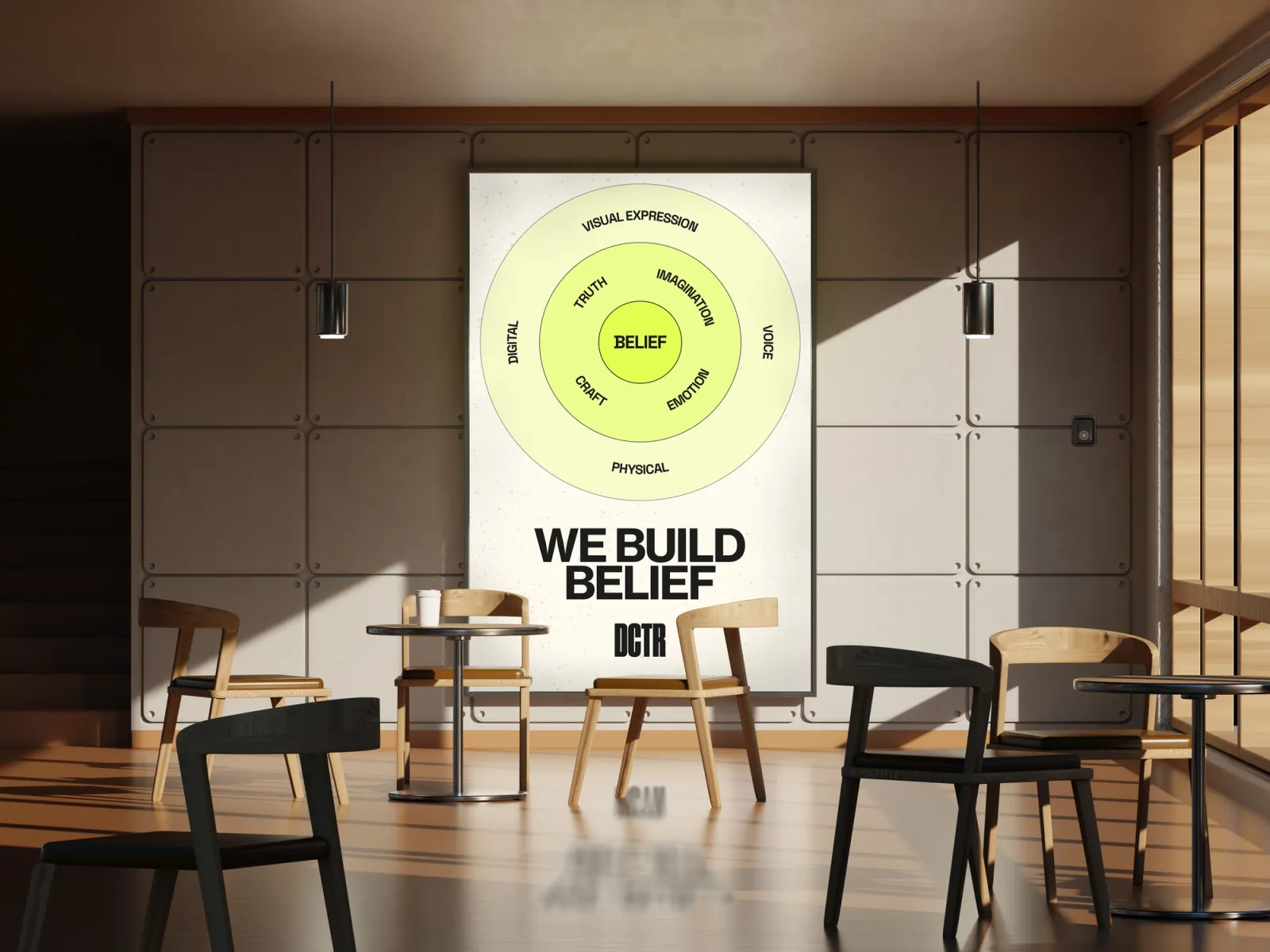
To bridge the gap between architectural CAD files and emotional buyer commitment, we developed the DCTR Belief Wheel.
Instead of jumping straight to ordering renders, every successful campaign starts with Insight to define a bulletproof Belief Proposition. From there, we deliver that proposition through four non-negotiable quadrants: Imagination, Emotion, Craft, and Truth.
1. Insight to Belief Proposition
Before drawing a single line or rendering a single pixel, you must understand the local buyer profile better than your competitors do. What are they running away from, and what are they running toward?
That insight forms your Belief Proposition: the single underlying promise that makes your site irresistible. You are not selling three bedroom houses; you are selling effortless suburban escape, or friction free urban connection.
2. Imagination: What We Want Them to Picture
Once the proposition is set, we build spatial and visual clarity. This is where CGI, dynamic web design, and motion work hand in hand.
Imagination is not just showing an exterior elevation. It is letting buyers picture their Sunday morning coffee on the terrace, understanding how natural light moves through the open plan layout, and visualizing how their daily routine unfolds inside those walls before a single brick is laid.
3. Emotion: What We Want Them to Feel
Renders appeal to the logical brain, but houses are bought on instinct and emotion.
We use atmospheric lighting, intentional pacing on your website, micro copy, and storytelling to evoke specific feelings: pride, security, calm, or ambition. If your marketing does not make a prospective buyer feel something when they scroll through your site, they will treat your development as just another commodity to haggle over.
4. Craft: What They Need to Understand and Buy Into
Buyers need to understand the tangible value of the product. This is where we showcase the physical and operational detail of the development: floor plan efficiency, material sustainability, specification choices, and lifestyle amenities.
Through interactive digital tools and clean visual hierarchies, we make complex architectural details intuitive and appealing. When buyers understand the craft behind the build, price resistance disappears.
5. Truth: Why Belief Cannot Be Built on Lies
This is the most critical spoke in the wheel. Building belief cannot be based on lies.
If a development is an accessible, well built regional starter home, do not plaster the word "Luxury" across the homepage. If it is not five star boutique living, do not try to talk like a Mayfair developer.
When your marketing claims to be luxury but the specification clearly says standard developer spec, prospective buyers sense the dishonesty immediately. Trust breaks, and sales stall. Truth means leaning into what your product actually is, celebrating its real strengths, and positioning it with absolute authenticity. Buyers respect honesty, and authenticity converts.
Stop Buying Renders. Start Building Belief.
Unbuilt developments fail to sell off plan when they treat marketing as a collection of separate deliverables rather than a unified brand launch.
CGI will always be vital for real estate marketing, but visuals alone cannot carry the weight of a multi million pound launch. If you want buyers to commit before the ground is broken, stop buying piecemeal assets and start deploying a framework that builds genuine belief.